Tag: Natural sounds

  • Why listening to birds is good for your health

    Why listening to birds is good for your health

    “Shag me, shag me, shag me.”

    After weeks of hearing a Great Tit scream this from the tree outside my bedroom, I was ready to sign him up to bird Tinder. OK, so I’m not a bird whisperer, and he might have been saying “Oi lazy, the feeder’s empty.” But it was that time of year when the birds all get a bit frisky and their calls a bit louder, and this poor fellow really did seem to be missing out on all the action.

    Despite this slightly jarring addition to the soundscape of my garden, I love to sit and listen to the different birds coming and going, chatting and scrapping, or in the case of the most ubiquitous of songbirds, the blackbird, announcing the start and end of the day. Each bird has a different story to tell and if you listen closely you can even tell the rain is coming because the sparrows start to cheep and chirrup louder and more frantically — I like to think they are doing a public service by telling me to get my washing in.

    In a study by researchers from the University of Surrey, birdsong was shown to be associated with perceived stress recovery and attention restoration, although not all birds were equal in their ability to calm. Wood pigeons and even chickens were associated with stress reduction, while “spooky” owls and the chattering and raucous magpies were seen as stressors.

    I’m not sure I agree with the latter as I love the magpies that come to my garden (including a playful family of five last year) and often have rambling conversations with them as they scoop up the leftover hedgehog biscuits. They are super intelligent (they drop the hard biscuits in water to soften them before eating) and I feel they appreciate the effort I make to create a bird-safe garden environment. But I can see how the calls they make could be disruptive to others.

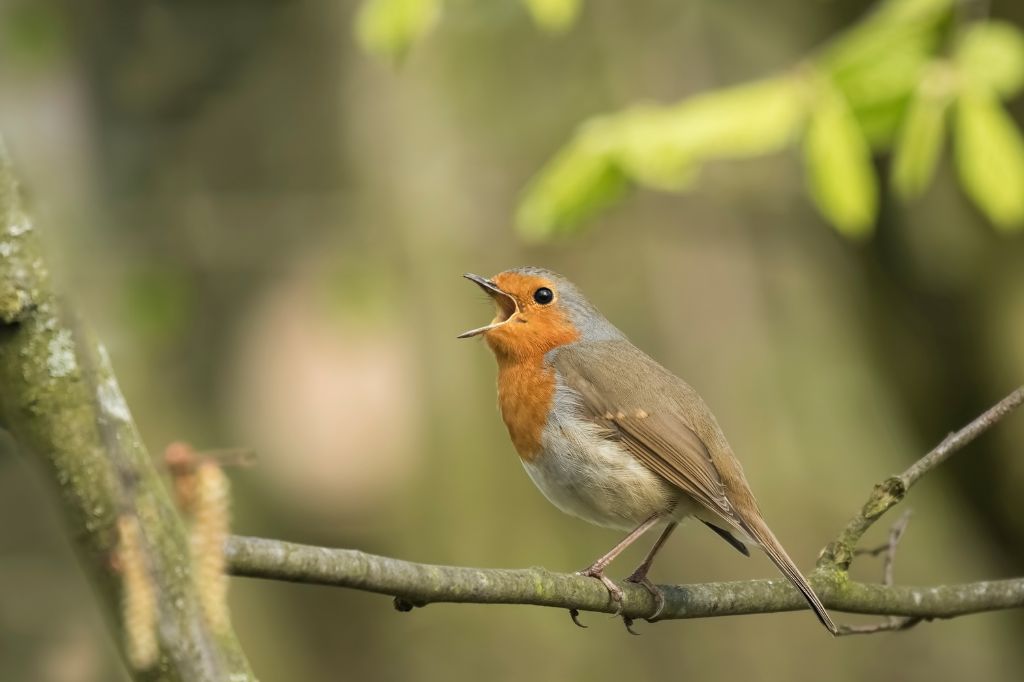
    Quite often the sound of a bird is the only thing to give away their presence, especially in urban areas where they might not be as obvious. The song of the robin can be heard long before you spy him hiding on the upper branches of a tree. Sitting and looking out of my office window there is a row of trees between me and the next lot of houses, and it is a haven for regular and just passing avian friends. In the summer when all the leaves are out, the songs and calls are all there is to identify who is lurking in amongst the green.

    Naturally good for you

    The cackling anguish that is a spooked blackbird is easy to recognise, others I have yet to learn, but a new sound is sure to catch my ear, and draw me away from my work for a few minutes of immersion in nature.

    The University of Surrey study showed that birdsong was the preferred natural sound (over water and other animal sounds) and that it could provide a distraction or alternative focus from stressors.

    But, unfortunately, this wonderful, free and natural stress reliever may not be around for future generations as the number of songbirds is in decline thanks to modern farming and building practices that destroy their natural environments.

    Save our songbirds

    We must act now to stop further destruction of these environments before we lose their songs forever. One way to help is to support local bird charities such as the RSPB in the UK or the American Bird Conservancy in the US. Another is to be aware of the sounds around you, learn which feathered friend is visiting your garden, office building or park. The more you listen the more you will be aware of any changes and be able to act.

    And remember, if the birds are singing, then nature has a smile on her face, and so will you.
  • Why we need to listen more

    Why we need to listen more

    Nine years ago, my tinnitus started. Silence was a thing of the past. Then over the last few years, I become more and more sensitive to and annoyed by noise. The quietest woof of a dog in the distance was enough to kick my fight or flight response into action. Every beep, bang or bark was an intrusion in my hearing space. At that point I hadn’t accepted that silence, due to tinnitus was a thing of the past.

    The Covid lockdowns made things worse. Some noise went away for a while – the bypass near our house was much quieter for a few months. But this was replaced by other humanmade noises – drilling, mowing lawns, and don’t get me started on the pointlessness of leaf blowers. There was an increase in people buying dogs (for company and as an excuse to leave the house more often). More dogs, more barking, more noise. The constant doses of cortisol hitting my system were leaving me exhausted, and a bit of a cow to live with, especially when I shouted out the window at the early morning dog walkers.

    Listen more

    What would happen if I listened more? I decided to stop fightling the noise and take control of the sounds I wanted to hear, and learn to adapt to or find ways to remove the noise that I didn’t.

    Sound is something we want to hear, something that pleases us.
    Noise is an unwanted sound, often humanmade.

    For example: at the moment I’m stood in front of my window, it’s a beautiful spring morning, the birds are flirting with each other and busying themselves making nests. This is a good sound. In the near distance, there’s a delivery vehicle announcing to the world with eardrum-pummelling squeals, that it is reversing, this is a bad sound. Before, this would have led me to don my noise-cancelling headphones, removing both the good and bad sounds. No more birdsong!

    So, if I want the birdsong in my life what can I do? Well now, I take a little more time and care when I’m listening. I can rationalise that the irritating noise will soon go away, and the birds will continue with their tunes (well, at least most of the time I can, it’s a work-in-progress). I try and tune into the sounds I want to, and let them flow over the noise, a DPD van reversing is little competition for a wren at full blast. This takes some time and practice, a bit like meditation, but it’s worth it, even if you only manage a few minutes at a time to start with.

    I believe we should be more active listeners to the world around us, rather than just accepting the noise. And this is especially important now while the world is a bit quieter and we can hear the sounds we want to hear. Noise pollution is not only stressful, but it also shortens life expectancy. A study by the World Health Organisation (WHO) shows that in Western Europe alone, at least 1.6 million healthy years of life are lost to noise pollution.

    There are some noises that I’m working to appreciate, rather than remove. The sound of people gathered in the park outside, chattering away, is something that, especially at the moment, should be cherished.

    Some noises are hard to appreciate or remove. Other than stealing all my neighbours DIY tools, there’s little I can do to silence that noise – and neither should I, they have a right to look after their property. I can however remove myself from the noise by going for a walk. I can also lead by example – this year we’re replacing our noisy electric lawnmower with a quieter cylinder one.

    For bigger noises, think planes, trains and automobiles, there are various groups you can join or support who are campaigning to either silence or quieten these intrusions. For example, HACAN campaign for those affected by the noise from planes taking off and landing at Heathrow.

    And it’s not all birdsong and wind rustling through the trees for me. There are still many times when the noise gets to me and I feel my anxiety rising. I’m not sure I’ll ever reach a sound nirvana. But for the sake of my health, and those who just want to walk their dogs at 6 am, I’m trying to accept the noises I can’t change, let the sounds I want to hear into my life, and work with others to remove or reduce the ones that are doing us physical and mental harm.

    But for now, why not open a window and have a listen to what is going on in the world around you. Sounds are subjective, ones that make me happy might make your teeth itch, and vice versa. So, try listening to the ones that make you smile, relax or feel part of nature. Those are the ones we need to amplify and appreciate before they’re buried in a world of noise.

    Originally published on Quest for Quiet (7 March 2021).

  • Swimming in silence

    Swimming in silence

    If you search ‘tinnitus swimming’ all the results talk about the negatives – swimmer’s ear being the main one, and how to prevent it. But for now, let’s take a look at the positives.

    My tinnitus is a barometer for my stress and anxiety levels. At the moment, after a brush with Covid, a nasty horsefly bite and some stressful deadlines at work my T is at peak attention-seeking. Swimming is my ultimate relaxant – although it has to be outdoors, I find indoor pools noisy and a bit grim (think used plasters floating by at eye level!). And it has to be skins, no neoprene here, although a bobble hat is essential and the absolute in outdoor swimming chic

    Outdoor swimming can also be a massive challenge. When I first started outdoor swimming in 2019, I was not a confident swimmer. The thought of not being able to put my feet down or the extremes of swimming in the winter took me so far out of my comfort zone, I’m not sure how I ever got back in the water, let alone fell in love with it. But fall in love I did, to the point I now swim in an old quarry that is 36 metres deep, with a 6m drop as soon as you kick off – no chance of putting my feet down. And this was the beginning of ‘silencing’ my tinnitus because the challenges meant I had something else to focus on.

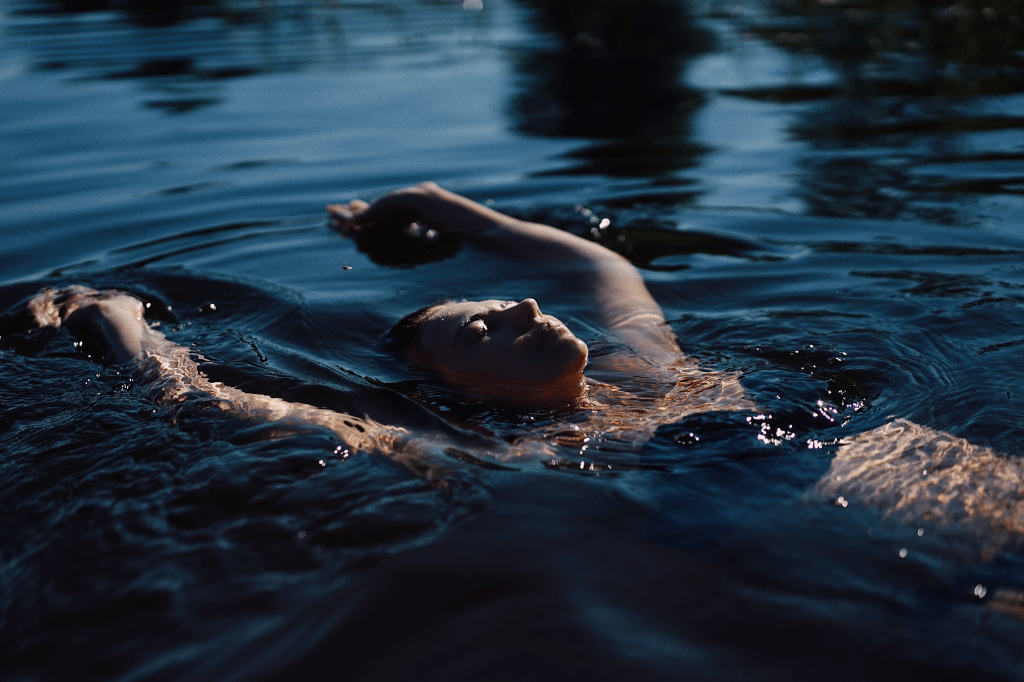
    Now I find outdoor swimming the most relaxing thing in the world. The moment I step into the water, everything else in the world disappears. My mind is either silenced and I just bob along, chatting with the cormorants, great crested grebes and kingfishers, or it awakens my creativity – many stories have been conceived and plotted in the silky ripples of a lake. With my stressors removed, my tinnitus no longer has a place in my consciousness.

    Swimming alternatives

    BUt what happens when I can’t go for a swim? Instead, I have cold showers, apologies to my neighbours who have to put up with the regular shrieks, followed by giggles and laughter. This has something of a dampening effect, but it is shorter-lived than the effects of swimming.

    Go back to 2016 when my tinnitus started and I never would have said that swimming would be my go-to thing for silencing the ringing. And I guess that’s kind of the point. You don’t know if something’s going to work for you until you try it. So, please try not let tinnitus get you down. Meditation is often cited as something to try, but it might not work for you – it doesn’t work for me. But what about knitting, or gardening or mountain climbing? I find the best way to silence my T is to do an activity where my brain has to concentrate, so it doesn’t have time to become obsessed with the ringing, music or humming.

    I’d love to know what works (or doesn’t work) for you. Perhaps something you never expected to work has become your go-to way of distracting your brain. Feel free to share in the comments below.

    Further info

    If you are interested in outdoor/ wild/ cold water swimming please check out Outdoor Swimmer’s guide to swimming safely.

    If you need help or support with your tinnitus the British Tinnitus Association support line is available Mon-Fri 9-5 on 0800 018 0527. If you feel like you can’t cope and need help outside of these times the Samaritans are available 24/7 on 116 123.

    This post was originally posted on Quest for Quiet (10 Feb 2021).

  • There’s no such thing as silence

    There’s no such thing as silence

    For the last few years, I’ve been searching for silence, often with less than perfect outcomes. I’ve become increasingly anxious with all the manmade sounds that surround me and felt a need to immerse myself in a silent world. But, then I realised unless I go and live in an anechoic chamber, there’s no such thing as silence. There’s always something there in the background, raising its hand, trying to make itself heard. And more often than not, that something is nature.

    What we mean when we say silence is a lack of manmade sounds. The screeching sound reversing bin lorries make, the drilling and hammering of a nation obsessed with DIY (more so since COVID), the monotonous rumble of traffic on the ring road. These sounds are, unfortunately, the soundtrack to our lives.

    And these manmade sounds are making us ill. The World Health Organisation (WHO) declared that noise pollution is the second biggest threat to health, after air pollution. And noise annoyance has been associated with a two-fold increase in depression and anxiety.

    But natural sounds are good for us, especially those of us with high-stress levels. They can also improve worker productivity, focus and mood. So, rather than searching in vain for silence, I should be looking for places that are overflowing with birdsong, waterfalls and rustling leaves.

    Let nature sing

    So, what should we do if all this manmade noise is getting us down? I’ve decided to surround myself with natural sound whenever I can, sometimes I stand in a field and just listen, other times I use nature as a barrier to other sounds. At the moment I’m listening to the springtime cacophony of horny birds, each one trying to prove they are the fittest by singing the loudest. It might not be the most soothing of natural sounds. I haven’t seen ‘Randy Pigeon’ on the Headspace list of sounds to relax to. But it doesn’t raise my heart rate or demand my attention as manmade noises often do. It’s just there, outside my window, in the background, doing its thing and letting me do mine.

    I’d love to be able to stand on a beach and submit to the rumbling waves and whirling winds, but current circumstances prohibit me from doing that. So, instead, I’ve been looking for local alternatives or natural soundscape recordings.

    Recently, I’ve become obsessed with Radio Lento, a podcast of natural sounds from around the UK. Launched in 2020, the podcast captures immersive soundscapes from deep inside forests to the shoreline of beaches. Interestingly they don’t edit out the manmade sounds. You can be listening to a soothing, trickling brook and then a car will drive by or a plane will interrupt the buzzing insects in the woods. And I quite like this. It reminds me that quiet is rarely perfect. According to Gordon Hempton, the Sound Tracker, there are only a handful of truly quiet places left on the planet — it’s unlikely one of them is my suburban back garden! Unless I can convince the Olympic National Park to let me move in, I’m going to have to accept some manmade sounds, and the Radio Lento recordings are a gentle way to let both worlds mingle without the human world taking over.

    Accepting that silence is impossible wasn’t easy. My brain craved nothingness. But surrounding myself with natural sounds has provided the quiet I needed. Natural sounds dowse my mind in calmness, allow it to just be, rather than racing away with every siren, beep and buzz. So, why not give it a try — next time you feel overwhelmed by the sounds of humanity, turn on some nature, go stand by a stream or lie down under a tree in a park. Let nature be your soundtrack to life.