Tag: Quiet

  • Travelling in peace, or the search for a silent minibar

    Travelling in peace, or the search for a silent minibar

    So, hands up, who can’t wait to book their next holiday?

    I love to travel and I really love hotels. I don’t understand people who say, “it’s just a place to sleep.” Ok, sure, if it’s an overnight stop on the way to your destination then a motorway motel will probably be ok.

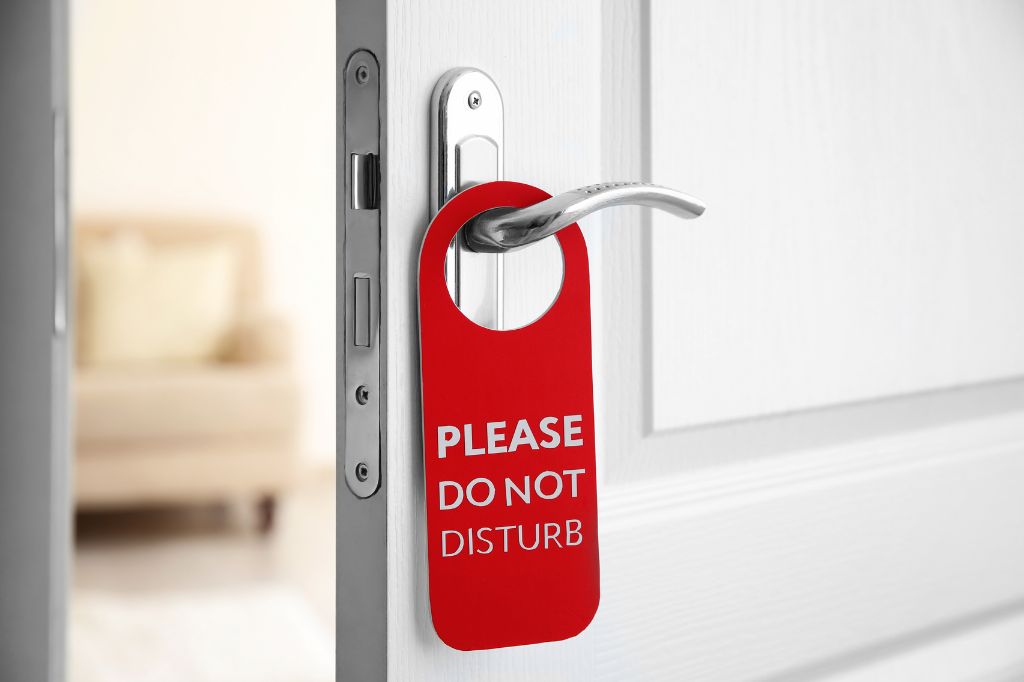
    But if I’m spending more than a night there then I need comfort, quiet and at the very least a rain shower. The key word there is quiet. A hotel can be the fanciest place, in the hippest new destination but if they have noisy lifts or a humming minibar, then I’m out of there.

    Tips for finding a quiet hotel room

    • Look at TripAdvisor. Honestly, I take many of the reviews with a pinch of salt – one person’s too-hard bed is another person’s best sleep ever. But one thing that stands out is the complaints about noise. From paper thin walls to slamming doors to the bane of my life, the humming minibar, you can guarantee that someone will have mentioned it.
    • Ask if the hotel has a quiet zone – some of the bigger chains have been introducing these.
    • Or if they don’t have on ask for a quiet room. And this is where being extra polite can help. Even when booking online I become the nicest person in the world (I’m quite nice anyway, but I really dial it up a notch) putting lots of pleases and thank yous in the comment/ request box.
    • Ask for a high floor – although do check if the hotel has a rooftop pool or bar – if so, you might be better off with a room on a middle level. High floors aren’t a guarantee of quiet but especially in cities they can put a few more metres between you and people and traffic on the street.
    • Ask for a room that is away from reception. You might have a bit of a hike with your luggage but a room further away from reception should mean less footfall going past your door. Corner rooms are quiet for the same reason – and less likely to have a lift nearby.
    • Big one – ask for a room away from the lift. Lifts are noisy – beeps and dings and creaking doors, and they are an area that attracts people; and depending on the speed of the lift can leave those people standing in the corridor, repeatedly pushing the button and loudly discussing what they want for breakfast.
    • Do you really need the stunning view? Especially if between you and it there is a four-lane highway or trams that run until 2am? If you prefer peace over mountains or sea, why not opt for rooms at the back or facing over the courtyard? Bonus – these rooms are normally cheaper.
    • After doing all this, make sure you get what you asked for. When checking in mention that you requested a high floor/ away from lift/ quiet room. Sometimes requests can be missed on booking and this gives the receptionist a chance to help you out and save you and them time.
    • And, finally, if you get to the room and it is noisy, ask to move. Hotels don’t want unhappy customers writing bad reviews so most will move you – and sometimes you even get an upgrade!

    Here is my standard request when booking a hotel room:

    Hi, please can I request a quiet room on a high floor and away from the lift. Many thanks for your help and I’m looking forward to staying with you.

    And remember if the room isn’t quiet or there are annoying noises, report it to the hotel first and give them a chance to rectify the issue.

    TripAdvisor and other review sites are great sources of information so please help your fellow quiet travellers and write a review – good or bad – to let them make the best choice. I’m going to commit to writing reviews that highlight noise (or lack of) in the title so you can spot them easily.

    I hope these tips help you when you book your next holiday. Happy travels!

  • Hearing therapy and what it’s taught me about tinnitus

    Hearing therapy and what it’s taught me about tinnitus

    Walking down a grey corridor in an unloved NHS community hospital, the curled edges of leaflets about coping with old age poking out of wire stands, I’m feeling a bit suspicious about how hearing therapy could help me. I enter a large room, peeling magnolia paint, tiny cell-like window, two chairs in the middle of the room. And there sat on one of the chairs my therapist. A vision of serenity with a genuine smile, she beckons me to the chair opposite hers.

    The last time I had therapy was with a slightly intense therapist, who stared too much and in one session had a giant bogey sticking out of his nose – I didn’t go back. That was for grief and anxiety. I really didn’t know what to expect from therapy for my ears!

    Tinnitus, from a medical point of view, really sucks. For a start it’s difficult (and subjective) to explain what you’re hearing – how loud is loud, what does the ringing sound like? Next, there’s little understanding of tinnitus and it’s causes, mainly because it’s not very sexy from a medical research funding point of view! You also can’t measure tinnitus – there’s no version of a thermometer or stethoscope that can give your doctor numbers to put on a chart or table. Despite this, there are things you can do to help manage your tinnitus. Such as hearing therapy…

    That first session I was asked a lot of questions – how, what, when, where my tinnitus affected me and set a couple of tasks – keep a diary of the sounds and think about what stress relieving activities I could incorporate into my life. I left feeling more positive, tinnitus still there, but I’d been able to ask the questions that had been worrying me: will it get worse, will it go away, will it spread to my other ear (I have unilateral tinnitus in my left ear). The therapist had answered the questions she could and been honest about the ones that she couldn’t. I trusted her and agreed to see her again the following month.

    Over the next year or so, I went back every few months. We discussed how I was getting on, celebrated breakthroughs such as a reduction in tinnitus perception, set objectives and agreed how much I should push myself. We also discussed sharing my needs with my family and friends – when my tinnitus is bad I get a throbbing pain in my ear, temporary reduction in hearing and inability to cope with more than one sound. After one session I went home and explained to my partner how he needed to say my name when talking to me to get my attention and that sometimes when driving I can’t cope with sound from the radio and also having a conversation. It’s little things, but they made a massive difference to how I coped with tinnitus and everyday stress. And the world was good for about a year.

    Then a few months ago I realised my tinnitus was back, really back, possibly worse than before. I didn’t panic, I knew it was stress-related – lockdown with noisy neighbours, cancelling the trip of a lifetime and keeping a husband with a heart condition safe had taken its toll. Thankfully, we’d left my therapy options open. One quick call and I had an appointment with my therapist – over the phone of course.

    My tinnitus hasn’t instantly got better, but the phone session gave me an opportunity to discuss what was going on in my world. I could rant about the noise from my neighbours and rather than feeling selfish, I was given support, told I wasn’t on my own in my (slightly/ very murderous) feelings about the people living opposite and given some new ideas to help calm the ringing in my ears. I even joined the National Trust afterwards so I could plan some quiet ‘me time’ at some of the local sites.

    What is hearing therapy?

    Hearing Therapy is a service which can provide information, counselling and practical assistance for people experiencing issues with hearing loss, central processing disorders, tinnitus and hyperacusis.

    The service uses the Tinnitus Retraining Therapy (TRT) approach which includes:

    • education
    • identifying triggers
    • implementing mindfulness-based stress reduction activities

    What has hearing therapy done for me?

    • Answered the worrying questions I had about my condition – or at least provided the information I needed to process my concerns
    • Helped me understand my condition
    • Helped me explore ways to reduce stress and manage my tinnitus
    • Helped to reduce my perception of my tinnitus – it’s always there, probably not going to go anywhere, but most of the time my brain ignores it
    • Showed me that the ‘me’ time I needed to help reduce stress is not selfish
    • Worked with my introvert personality to find the best coping methods and stress-reduction activities
    • Given me the words and concepts to discuss my condition with my partner, family and friends so they can better understand it and my needs.

    Hearing therapy is not a quick solution. You need to put in the time and effort to help yourself. Having an appointment in my diary meant that I had focus on the homework I’d been set – I’m someone who needs deadlines so this this was important for me.

    If you think hearing therapy could help you, please get in touch with your GP or medical provider. From my initial suspicions about any kind of therapy, I am now so grateful for the time I had talking through, addressing and learning to cope with my tinnitus.

    Find support

    More about tinnitus retraining therapy (TRT) from the British Tinnitus Association.

    If you need help or support with your tinnitus the British Tinnitus Association support line is available Mon-Fri 9-5 on 0800 018 0527. If you feel like you can’t cope and need help outside of these times the Samaritans are available 24/7 on 116 123.

    Here’s a link to the Bath and North East Somerset Community Health and Care Services hearing therapy service that I used. This is a free service. A quick look at other NHS trusts shows similar services, but please check with your GP. For non-UK countries please contact your local medical provider.

  • How to find quiet in an open plan office

    How to find quiet in an open plan office

    Buzz, bang, beep, cackle, holler, door screeching slowly closed. These are just some of the noises that welcome those of us that work in open plan offices. After several years of suffering in my own open-plan-noise-hell I’ve discovered there are plenty of things you can do to create quiet in even the most gossip-ridden, Tuesday-fire-alarm-testing, two-hour-speaker-phone-meeting office environment.

    Several years ago, I started working in my first open plan office. I wasn’t a big fan, but we had big windows looking out on to trees and green fields and large desks where we could create our own space. Then the company decided to fit more and more people into the same tiny area. Suddenly we went from two people on a desk to three, then four. I went from having several feet between me and my colleague to practically sitting on each other’s laps. It didn’t help that the intern who sat next to me had no concept of personal space, or indeed a volume button.

    As the noise went up, my stress levels went up and my productivity went down. Open plan offices done properly can improve collaboration, personal connections and create opportunities for people from different departments to mix and perhaps come up with the next big idea. However, they can still be loud and distracting and the background noise can reduce cognitive ability leading to reduced productivity.

    In my case they can also induce a slight murderous rage when the man-spreading senior manager next to me used to take hour long calls at his desk and clearly had no concept of how phones worked or he wouldn’t have been shouting down the receiver.

    But don’t worry there are plenty of ways to reduce the amount of noise in these notorious sound generating environments?

    What can you do to reduce noise levels in open plan offices?

    A lot of the noise in your office is probably out of your control, but here are a few things that can help create some quiet space for you:

    • Wear standard or noise cancelling earphones. This way you can listen to the sounds you want to. Just make sure they’re not turned up too loud, so you don’t contribute to the problem.
    • Lead by example
      • turn off unnecessary (all in my opinion) notifications on digital devices
      • have conversations away from other people’s desks
      • don’t talk over desks – it’s tempting if you have desk dividers to pop your head over and have a quick catch up with a colleague, but you won’t be the only people hearing the conversation.
    • Explore your office – find the quiet spaces that others haven’t discovered. I found so many ‘secret’ cubbyholes where I could find space and quiet when I needed it. Tip: the canteen outside of peak times can be an unlikely haven.
    • Don’t let things get really bad. Talk to your manager. A simple desk move might solve the problem. Don’t let things build up and bubble over. Address them before they have a negative impact on your health and mental wellbeing. Your manager might not even realise there is a problem. Go to them with some solutions and see how you can solve the problem together.
    • A personal one. At Christmas don’t bring in a musical clock that every hour places a tinny, high-pitched ‘version’ of Jingle Bells. You know who are, Lou!

    Office managers these ones are for you:

    • Create quiet spaces where people can focus on their work away from distractions.
    • Conversely you could create a noisy area – somewhere for huddles, lunch breaks, team training sessions to take place – just make sure it’s not next to the quiet space.
    • Assign quiet times – perhaps post lunch when everyone is in a bit of a lull anyway.
    • Introduce a visual key system so people can show if they are willing to be interrupted. We placed coloured cards on the top of our screens – green for yes, I’m free and happy to speak and red for I’m focussing on a task and do not want to be interrupted. Or there’s the earbud code – one in for happy to be spoken to, two in for leave me alone.
    • Encourage staff to work from home. Yes, I know many companies are encouraging/ forcing workers back to our offices but one or two days a week at home can make a massive difference to the quality of life and productivity of an employee who prefers it quiet.
    • No speakerphone conversations in the office – hearing one voice is bad enough!
    • And leading on from this – no video calls at desks. Encourage everyone to treat video calls as a meeting and go to a designated meeting space.
    • Move noise generating equipment away from desks and quiet areas. It might be a noisy machine, or it could be people congregating and chatting at the printer.
    • Finally, listen to colleagues who say they are struggling with noise. Work together to see how things can change. They might not be the only ones who are having a bad time. Simple changes can make a world of difference to their health and mental wellbeing and your business productivity.

    There are also myriad ways of reducing the sound by, for example, changing the layout, adding acoustic panels and planting living walls. These maybe suitable for your business or not but a quick google brings up loads of options in varying price ranges.

    I’d love to know how other people cope with open plan offices – from both a personal and business perspective. Keeping everyone happy is not easy but as we spend so much of our time at work, we need to learn compassion and respect for our colleagues. I don’t want to silence the loud voices, but equally they shouldn’t be the only voices heard.

  • Notifications and alarms – why it’s time to silence your digital world

    Notifications and alarms – why it’s time to silence your digital world

    Back in the late 1980s, my Nan bought a Grandfather clock for my Grandad. And my grandad was delighted. He set it up and we all waited patiently for the next hour to arrive. Ding-dong-ding-dong it went. We all clapped enthusiastically. Fast-forward a couple of days and the once novel chimes were driving us to distraction. Another couple of days and the bells were silenced, only to be allowed to ring once a year on New Year’s Eve. We didn’t need to be alerted to every passing hour of our lives.

    More recently, at a family event, I found a rather more modern technology was driving me to distraction. Ding went my Nan’s iPad. Boing went my mother’s phone. Yet another phone announced ‘your son is texting you’ to the whole room. It took a lot of willpower, and a desire to remain on the Christmas present list, not to grab their devices and lob them out the window. And these digital noise offenders weren’t my younger cousins or their kids, these were the boomers and early-born Gen Xers. They seem to have missed the memo on the effects of app notifications and allowing your digital devices to infiltrate every waking moment.

    And I wouldn’t mind if they got up and answered the alert. Nope, my Nan’s iPad continued to ‘ding’ away in the corner, each ‘ding’ seemingly getting louder each time it was ignored. She’d acknowledge each ‘ding’ by stopping the conversation, saying ‘oh that’s an email’ before going back to whatever she was talking about.

    Just turn them off

    Just to clarify — turn off your notifications, not your grandparents.

    I used to be an early adopter of various devices but then I got bored with the faff of setting them up, not to mention the cost. My Samsung phone is eight years old and the phone company have given up sending me updates on the latest phone that I ‘really must have’. And in the eight years I’ve had the phone the only sound it has ever made is ‘ring’. I will admit that at one point in the early 00s my Nokia used to beep out the theme tune to Fraggle Rock, but I have learned my lesson.

    The first thing I do whenever something digital comes in the house is turn off all the beeps, dings, bleeps etc. With the exception of my sodding attention-seeking washing machine which I can’t silence — AEG I’m looking at you.

    And it’s worth the ten minutes of my life it takes to do this — I know it’s a foreign concept to some but I believe if something is really that urgent the person will call me.

    Pay attention

    Those little dings, bings and bleeps do nothing but seek and divert our attention. Some studies suggest that app notifications are to blame for our lack of concentration. Others say that they are a symptom of a society that expects us to be contactable (by work or family and friends) at all times which has a knock on effect on our health and wellbeing. Whichever it is, turning off your notifications solves both problems.

    study by Deloitte showed that the average American household has 25 connected devices — that’s a lot of things that go beep. And according to RescueTime we pick up our phones an average of 58 times a day — often in response to a notification. And once you’re on your phone you may as well check the news or the latest TikTok trend. Now, what was I doing again?

    Plus, if like me, you’re someone with hyperacusis (noise sensitivity) the sounds can create anxiety and a reduction in general wellbeing. Add in misophonia (a decreased tolerance to specific sounds) and I’ll be the person sitting next to you on the train plotting increasingly vindictive ways to kill you while your phone beeps away, letting you know there’s a photo of your cousin’s kid playing football on WhatsApp. Think about those around you — an app notification that makes a sound is not only notifying you.

    I’m focussing on the sounds devices make here because I write about sound and hearing health. But it doesn’t have to be sound — a red dot or flashing light can be equally distracting — if a little less annoying to those around you.

    I’m not dissing tech and social media. After I’ve pressed publish on this story I’ll head over to Bluesky to share it. But as much as I’d like you to read this story, it will never be that important that your device has to alert you to its presence.

  • What is noise pollution and what can you do about it?

    What is noise pollution and what can you do about it?

    Stop for a minute. Turn off the TV. Take off your headphones. What do you hear? If you hear nothing but natural sounds — birds, water, bees buzzing, then you’re either very lucky or your brain is doing its utmost not to hear the everyday noise of the human-made world.

    And our brains are very good at this. Walk into a room with a smelly dog and you’ll probably wrinkle your nose at first, but give it a while and nose blindness will kick in. The same happens with sounds and noise. But even if we can’t ‘hear’ them they are still having an effect on our bodies and our wellbeing. A WHO study showed that one million healthy years of life are lost every year due to traffic noise in western Europe alone. One million healthy years of life!

    And guess who is more likely to live in areas with higher levels of noise pollution? Yep, people with lower socioeconomic status and other disadvantaged groups.

    What is noise pollution?

    We hear a lot about air pollution, with good reason. Interestingly many of the things that cause air pollution also cause noise pollution — cars, planes, factories — they do a real number on the environment around them.

    Excessive noise seriously harms human health and interferes with people’s daily activities at school, at work, at home and during leisure time. It can disturb sleep, cause cardiovascular and psychophysiological effects, reduce performance and provoke annoyance responses and changes in social behaviour. World Health Organization (WHO)

    Last week the UK and Europe literally burned in a record-breaking heatwave. As per the advice I kept my windows and curtains shut during the day to keep out the worst of the heat. In the late evening, when it finally cooled a bit, I opened the windows and was greeted by the sound of lawnmowers. Who the f*ck is mowing their lawn when it was still 30+ degrees. Why the f*ck would you mow what is essentially now straw due to the climate crisis-induced heatwave. This action was unnecessary and showed a distinct lack of consideration for their neighbours. I shut the windows and swore and sweated a lot.

    Noise pollution is harming the environment. Noise pollution is harming human health. It can lead to hearing loss and tinnitus. It creates stress in the body leading to cardiovascular disease. It reduces children’s ability to learn. It affects sleep patterns — a big one for me, and trust me the world doesn’t need me getting less sleep.

    Noise pollution needs to be a political issue. It needs to be a priority in every political party manifesto. Environmental groups need to talk about it more. Reducing or changing the things that make noise will have a positive impact on the climate crisis.

    But what can I do about it?

    First of all, listen. Listen for the good sounds, the birds singing, the arrival of bees in spring. Not only are these sounds good for your wellbeing, they also need someone listening out for them so that if they are impacted by human behaviour someone notices and does something about it.

    Other practical things you can do include:

    • Stop flying — that’s it. We all know we need to stop doing that shit.
    • Ditch the car if you are able — walk, cycle, wheel or use (quiet) public transport instead. And no, electric cars aren’t silent. The engines might not roar like a diesel or petrol engine, but the noise they create when travelling on the road is just the same.
    • Campaign for low-traffic neighbourhoods and lower speed limits in your area. Remember 20 is plenty where people live.
    • Dig up your lawn and replace it with herbs and pollinator-friendly plants = no more lawn mower or strimmer. I did this and the increase in bees, birds and butterflies has been amazing. Plus we saved £150 on replacing our broken lawnmower.*
    • Talk to your local council or government — make them understand that this is an important issue. Ask them to consider noise pollution whenever they approve a new housing estate or road. Perhaps instead of a new road, they could improve the walking and cycling infrastructure?

    These suggestions link closely to noises that I feel impact my life. You might have other noises that you feel are more urgent to rid your environment of. One person I follow on Twitter would love to see the end of leaf blowers. Why not buy a rake and broom instead — that way you also get a workout.

    It’s time to get noisy about noise.

    *Lawns are carbon sinks. If you dig up your lawn replace it with other plants and trees. Don’t pave over it or replace with other forms of hard landscaping.

  • Simple solutions for a quieter life

    Simple solutions for a quieter life

    Back in the day when I used to commute to work the simple task of getting the train used to raise my stress levels to breaking point. Five days a week I’d arrive at the station five minutes before my train, then wait an extra ten minutes because the train was always delayed. I’d then jostle with my fellow commuters trying to claim a spare foot of space as my own. The journey itself was 12 minutes, except on days when we had to stop because of branches, cows or swans on the track (yes, all three of those we’re given as reasons for delays). And by the time I reached work, I was a jittery mess of anxiety and hatred towards all humanity.

    Yes, the delays were frustrating, paying for a seat and not being able to get one was a tad irritating, but the thing that got to me most was the noise. From the minute the carriage doors clunked shut there was constant noise. The train manager making unintelligible announcements over the PA. The squeals, bangs and squeaks of under-invested in rolling stock. The new phenomena of people playing music or watching movies without headphones — it was bad enough having loud, tinny music leach from headphones, but this new antisocial habit is enough to make me shove their devices into some very dark holes. And who can forget the very important man (yes, always a man) who doesn’t understand how a phone works and shouts so loudly into the receiver that the whole carriage knows just how important it is that Steve gets the contract to Maggie by close of play.

    In the end, I started driving to work — yes, I know this is not the sustainable option, but honestly, I was so far past the end of my tether that I was liable to headbutt the next very important man I came across. My commute time went from 12 minutes to 45 minutes, but those 45 minutes were quiet. Before this, I was ready to quit my job but this little change allowed me to hang on until I was ready to go freelance.

    In an increasingly loud world, opportunities for quiet seem to be diminishing. From the minute we wake up to the beep beep beep of our alarms to the time we are lulled to sleep by the near-constant rumble of traffic and aeroplanes noise is always there. And it’s killing us.

    So how can you find the quiet space you need?

    Explore your local community

    Even in the busiest of city, you can find quiet nooks and crannies. Sometimes they are obvious places like large, tree-filled parks but there are also plenty of hidden spaces waiting to be discovered. One of my favourite places is churches. I’m not religious but the enforced quiet of a religious building can be a blessing. But you need to avoid the fancy ones, the ones that tourist flock to.

    For example, Liverpool has two cathedrals. The first, and oldest is the appropriately named Liverpool Cathedral. An imposing building full of stained glass, stone carvings and tourists. The other, Liverpool Metropolitan Cathedral, is a modern building with a derogatory nickname due to its, shall we say, distinctive architecture. And because of this fewer people visit making it a much calmer space. This building is a wonderful space to escape the rumble of traffic and bustle of the nearby shopping centre. (If you’re not religious please be aware of the religious practices in the building and act appropriately).

    Turn everything off

    Nice and simple this one. Take off your headphones. Turn off the TV, phone and tablet. If you are constantly listening to your devices you won’t know when there is quiet around you.

    Yes, they block out unwanted noise, but you are just substituting one noise for another. Turn them off and listen. Let your ears lead you towards the quiet they crave.

    Change your schedule

    A few years ago I worked in an open-plan office. Well, that was its own special kind of hell. No Phil, making hour-long calls on speakerphone is not sodding appropriate. Other than building your own fort out of reams of printer paper and broken A4 binders there’s not a lot you can do to change the physical space. But what if you changed when you are in the space?

    My old company allowed flexi-time — as long as we were in the building for the core hours we could start as early as 7am and finish as late as 8pm. I was an early bird and would arrive outside the office at 6.59am and leave just as the clock struck 3pm. This worked because the rest of my team were night owls who would rock up sometime between 9.30 and 10.00. Leaving me with up to three delightful hours of quiet every day.

    Depending on your company this might take a bit of negotiating, but it’s worth a try — even half an hour of quiet a day could make a difference.

    Avoid traffic

    Venice and Amsterdam are major European tourist sites, filled with people, cafes and restaurants. But they are both missing one thing — cars. Thanks to their unique landscape and, in the case of Amsterdam, their attitude towards cars, they are filled with the hubbub of people, but they lack the roar of motorised transport.

    Some towns and cities are finding ways to reduce our reliance on cars but others are still stuck in a car is King mindset. This gives you another reason to explore your neighbourhood or perhaps try a different walking route to work.

    If I walk the most direct route from my house into town I end up walking alongside a major road — filled with all the accompanying air and noise pollution. But if I take a diagonal route, it adds five minutes, but it avoids the main road and takes me along a tree-lined path that skirts a brook with all its accompanying bird song and babbling. For the sake of five minutes, I know which my lungs and ears prefer.

    I hope these simple ideas will help you to find some quiet space. I’d love to hear if you have any other ideas for finding a bit of hush in our increasingly noisy world.